Cycling Options While on a AMA Waterways River Cruise

Those who have travelled to Europe will agree to the fact that there are many people riding bikes on the road. Many years back when European cities were being developed, they were arranged around a hub and designed in such a way that residents could live within a practical distance to the city center.  Today, many people in Europe prefer using bicycles to commute. Countries like Netherlands and Germany have made it easy for people using bicycles as a means of transport by weaving bike paths and including stoplights on roads.
Europeanbarging is pleased to offer cycling options on AmaWaterways river cruises in Europe.
Bicycles_Danube_Lifestyle_PR

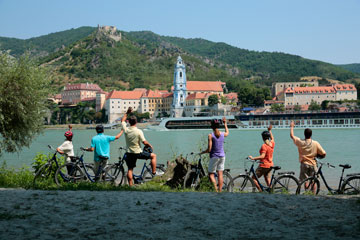
“Riding bicycles is a convenient, healthy and beautiful way to move around the city. AMA Waterways gives you an opportunity to explore amazing places in Europe. AMA Waterways is one of the first river cruise lines to carry bicycles on board, so that customers can experience biking alongside captivating riverside pathways.” Jan Baumgartner, Europeanbarging

If you are looking to join the exclusive guided bike tours or discover Europe on your own, there are many ways you can do this on a bicycle during your cruise.
There are English speaking guides on the bike tours. As you ride your bike through historic villages and grand capitals, you will learn more about the history of the place you will be cycling through.

Whenever you feel like venturing out by yourself, you can always jump on your complimentary bicycle whenever you want and cycle down the riverside path to discover more. You will be provided will locks and helmets.

Whenever you cycle through Europe, you will have a great feeling that makes you feel good-a feeling of connection. You will be discovering the history of the destination and local culture, which is very important in creating an unforgettable memory that you will share with your friends and family.

Cycling opportunities include:
• Cycle through Vienna to discover Klosteneuberg and enjoy a cup of coffee and cake
• Cycle through Bamber, a historic town and also UNESCO World Heritage Site and discover its famed market gardens and breweries.
• Cycle through Antwerp and discover fortress, hidden quarters and museums

AmaWaterways offers its customers a unique way to discover European sights and scenery. Most importantly, there is no charge for using the bicycles on board, and as a guest, you have the freedom to venture out on your own.

Additional information is available from Europeanbarging.com 888-869-7907
Famous Reims Cathedral Stained Glass Windows by Marc Chagall


Marc Chagall- A World Renowned Artist

Marc Chagall was one of the most renowned and successful artists of the 20th century. He was born in 1887 and died in 1985. Though born in Russia, the artist spent the longest period of his life in France. This Russian-French artist is famous for various artistic styles and was a pioneer of modernism. He was fascinated with many artistic styles and created works in practically every medium of art such as paintings, stained glass, fine art prints, tapestries and book illustrations etc.

For a long time Marc Chagall has also been respected as the world’s pre-eminent Jewish artist due to the greatness and variety of his work. Chagall is famous for his works inspired by the Bible and for painting the ceiling of the Paris opera in 1963. He masterfully used the medium of stained-glass to produce windows for the cathedrals of Metz and Reims.

“God’s Lantern”

Metz’s stunning St. Stephen’s Cathedral, which has the second tallest nave in Europe, is also famous for Chagall windows shining among its 70,000 square feet of leaded glass artistry. This glass work makes it the most illuminated cathedral in France and causes the cathedral to be known as “God’s Lantern.”

St. Stephen’s is the only German church for which Marc Chagall created windows. Blue light shines through the stained-glass into the interior of St. Stephen’s, making angels and other Biblical figures apparently move ethereally in this light.

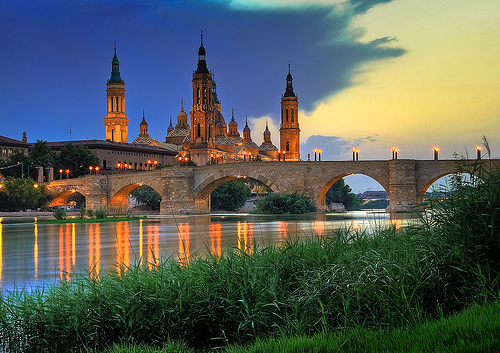
In 1974, Marc Chagall, in collaboration of the Jacques Simon Workshop, created three stained-glass windows for the axial chapel of the Cathedral in Reims.

The realization of these windows, which took six years (1968-1974), was made possible thanks to the donations of the Committee of Builders of Champagne-Ardenne, and a membership drive conducted by the Friends of the Reims Cathedral.

There is also a Marc Chagall Museum in Nice France. This museum is located on the top of the ancient hill of Cimiez and is surrounded by a beautiful garden planted with Mediterranean trees. This museum contains the largest collection of Marc Chagall’s works which are on display in a permanent exhibition.

Our barge cruises through the Champagne region of France include visits to Reims Cathedral and other wonderful places. Book your trip with us. Call today!

Visit the Gutenberg Museum in Mainz While on a Rhine River Cruise

A visit to the Gutenberg Museum in Mainz is often included on any Rhine River cruise that stops in Mainz or Frankfurt. When visiting this museum, tourists are able to find greater meaning in books and the way they are formed. The purpose that these materials have made in life, from the bible and other world-renowned literature is superior to many. The records that have been stored without damage and are very visible to the eye can be credited to Gutenberg. Located in a quiet area near the river, there are many places for tourists to shop comfortably.

At the museum, there are reconstructions of print shops and Gutenberg’s hand press, an exhibition of incunabula, and the first two Gutenberg bibles are on display in a strong room. They also have a section devoted to the Far East with colored woodcarvings and prints from Japan, China, and Korea. There is even an exhibition on the electronic future of books. Most displays have an English translation. You can purchase a guide in several different languages with your admission.

A group of people founded the museum in 1900, 500 years after Johannes Gutenberg’s birth, to honor the inventor and present his technical and artistic achievements to the public at large. They also aimed to exhibit the writing and printing of as many different cultures as possible.

Publishers, manufacturers of printing machines, and printing houses donated books, apparatus, and machines, which formed the basis of the collection. In its first few years, the museum was part of the city library, meaning that the most beautiful and characteristic volumes from the library’s extensive collection could be requisitioned for the museum. Visitors were thus presented with a survey of almost 500 years of the printed book. In time the museum expanded to include sections on printing techniques, book art, job printing and ex-libris, graphics and posters, paper, the history of the writing of all cultures of the world, and modern artists’ books.

The Gutenberg Museum was originally laid out in two rooms at the Kurfürstliches Schloß (Electoral Palace Mainz), which also accommodated the city library. The museum moved into the new library building on the Rheinallee in 1912. The same year, 1925, saw the installation of a reconstruction of Gutenberg’s workshop which soon became one of the museum’s main attractions. Typefounding, typesetting, and printing could now be demonstrated visually. The replica of Gutenberg’s printing press, rebuilt according to the 15th- and 16th-century woodcuts, proved an object of great interest to visitors and was henceforth shown at a large number of exhibitions all over the world.

In 1927 the museum was able to move into the building Zum Römischen Kaiser (1664) in Mainz. This is now where the museum’s administration, the restoration workshop, the library, the Gutenberg Society, and the domicile of the Mainzer Stadtschreiber are housed. The Late Renaissance building was heavily bombed in 1945; the museum’s contents had been stored in a safe place and thus remained intact. In 1962, the restoration of the Römischer Kaiser was complete. A new, modern exhibition building was also opened in the place where once the guest house König von England stood.

Acquisitions

The museum made several important acquisitions in the following years, among them a second Gutenberg Bible, the Shuckburgh Bible in two volumes (1978), and two block books printed using wooden formes and today extremely rare. Another major change was the introduction of the museum’s educational unit in 1989. In 2000, the old museum building was restored and extended.

For river cruises that dock at Mainz, we have many options – from short-mini cruises of 4 nights, 6-night cruises from Strasbourg, and various  7-night cruise itineraries.

For additional information or to check availability, contact us at www.europeanbarging.com 888-869-7907 or jan@europeanbarging.com

Europeanbarging Presents Their 2014 Brochures

Europeanbarging – the company established in 1998 and specializing in European barge and river cruise products presents their cruises through three new brochures for 2014.

Barge Brochures

spainBarge Brochure is an extended edition of the 2013 updated with new offers on cruises. Those are: 24 passenger Raymonde cruising Champagne France, 24 passenger Madeleine cruising Alsace Lorraine, 24 passenger Anne Marie cruising Provence and the 6 passenger Wine and Water cruising southern Burgundy. All of these new cruises are 6 nights and include excursions, wine with meals, open bar and bicycles for cycling.
Raymonde explores the Canal Latéral a la Marne and the Marne River, so that it gives fantastic insight into the riches of French heritage. The Canal Latéral a la Marne was built between 1840 and 1846 in order to improve navigation conditions and to promote trade. The canal is 67 km long, of which 16 km -go through the Montagne de Reims Natural Park, it has 15 locks along its route and it is used most often nowadays as part of the network of “Green Ways”, or cycle paths. This water way in north-eastern France is significant because it connects the Paris Basin to both the Rhine and Saone rivers. The Canal Latéral à la Marne links Vitry-le-François to Dizy, with the towns of Chalons-en-Champagne and Epernay and the village of Hautvillers, birthplace of Champagne, along the way. From that point onwards, the canal joins the Marne River which is navigable all the way to Paris, and passes through the towns of Chateau-Thierry and Meaux before it reaches the French capital city. The Marne canal and river form an important structuring axis for the areas and villages through which they pass, and they are intimately linked to the history, economy and social life in the valley.

Madeleine cruises between Strasbourg and Xouaxange. This section of the canal, also called the Green Route, flows through the plains of Alsace and the Vosges. It forms the link between Strasbourg and Saverne and is the gateway to Alsace at the foot of the Vosges Mountains. Its route takes it through a wooden massif as far as Lutzelbourg in the Moselle. Its spectacular course, which can be seen in many works of art and paintings, follows the inclined plain at Arzviller – unique in Europe – where boats are hoisted up a cliff before they reach Xouaxange – a pleasant commune in the Moselle.
Anne Marie cruises the Canal du Rhone and Sete. It discovers authentic landscapes as a journey through the two beautiful regions of Provence-Alps-Cote d’Azur and the Languedoc Roussillon. The current canal du Rhone-à-Sète is made of previously constructed canals: the canal de Beaucaire, the canal de Radelle and the canal des Étangs. The canal is about 98 km long and from it you can observe the rich variety of fauna in the lakes, as well as watch professional fishermen. From Avignon to the port at Frontignan, the cruise begins on the Rhone, a mighty river and a great power source. Next come the historic twin towns of Tarascon and Beaucaire (with its port), where the canal joins the Rhone. Then at the foot of the Costières plateau, St Gilles du Gard can be seen with its beautiful landscapes and its magnificent 12th century abbey. Next town of Aigues-Mortes has a tumultuous history. It is in the heart of the Camargue region, with its bull breeding farms and white horses. Finally the route takes you across the lakes and you reach the port of Sète.

The last news for barge cruising is Wine and Water cruise in southern Burgundy. It starts in Vandenesse and ends in Dijon.

Check Out Two Different Itineraries in Spain

Europeanbarging River Cruise Brochure offering 2 different itineraries in Spain on the Guadalquivir and Guadiana Rivers as well as some new cruises in Bordeaux and more short cruises throughout Europe as well.

Casual Bike & Barge Brochure introduces two 20 passenger casual bike and barge vessels cruising in tandem in Provence, so Europeanbarging can offer groups of 40 barge cruising together now. There are also a few dates available on a new Main River cruise itinerary between Miltenberg and Bamberg and for passengers who want an unstructured bike and barge itinerary Europeanbarging prepared the 6 passenger Johanna cruising Flanders in Belgium with great itineraries of Flanders Fields, Chocolate and Beer as well as Art Cities.

Europeanbarging is an ARC accredited company located in Spring Texas a suburban area north of Houston Texas.
Contact information:

Jan Baumgartner – Europeanbarging 25132 Oakhurst suite 130 Spring, Texas 77386 USA
Telephone: 713-240-6753 fax 281-419-3920 Toll free 1-888-869-7907
Email: jan@eurpeanbarging.com

Lorelei Passage on the Rhine River

Lorelei Germany is the Place to Visit

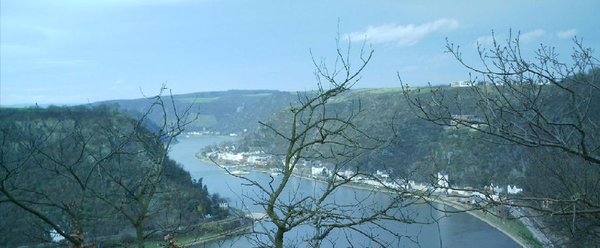
lorelei germanySituated on the eastern bank of the Rhine near St. Goarshausen, Germany, Lorelei refers to a mighty slate rock that soars around 120 meters above the waterline. The rock is the most prominent feature of the Rhine Gorge that is a 65 km section of the river between Koblenz and Bingen which lists on UNESCO World Heritage Sites. Lorelei rock is 433 feet high and the Rhine River at this famous point is up to 82 feet deep and only 371 feet wide. So,
Lorelei passage defines the narrowest part of the river between Switzerland and the North Sea.

Lorelei rock is very famous and has a lot of history and folklore associated with it. According to a popular legend, Lorelei was the name of a young maiden who jumped to her death from the rock due to an unfaithful lover. Then, she became a siren who bewitched the hearts of the sailors with her hypnotizing voice and when they looked up to the rock, their boats crashed and they were engulfed in the deep waters. The legend says that Lorelei’s voice can be heard even today. The legend of Lorelei has inspired several works of art, music and literature apart from popular folklore. Among the dozens of poems and songs it has inspired is Heinrich Heine’s “Die Lorelei”.

Since the Middle Ages, Lorelei passage has always been very difficult to navigate as it is extremely narrow. Even in the 19th century, it was an ordeal for ships to pass this point due to reefs and rapids.

Several river cruise ships sail the Rhine River. So you can get aboard one and enjoy watching Lorelei and many castles on the way. The vineyards along the way offer some beautiful views.

Rhine River Cruise

Our Rhine River cruise will be a perfect choice for you to enjoy the beauty of the Rhine Valley which is full of medieval German castles, historic towns and vineyards and of course the very famous Lorelei rock.

For more information contact: Europeanbarging, 888-869-7907, jan@europeanbarging.com