Visit the Baroque Stift Gottweig Monastery on a River Cruise to Austria

The Benedictine Stift Gottweig Monastery stands on the eastern edge of the famous Danube valley area, the Wachau which is among Austria’s most famous wine regions. On the southern banks of the Danube, opposite to the town of Krems, the monastery is positioned 449 meters above sea level. Given its peculiar placement on the Göttweiger Berg mountain, it is also known as the “Austrian Montecassino”.

Established by Saint Altmann, the bishop of Passau in 1083, the Stift Gottweig Monastery was handed over to the Benedictines in 1094. Since then, forestry and wine-growing have substantially anchored the local economy with great emphasis on the development of the wine-growing industry.

The old cloister of the monastery was destroyed in 1718 following a great fire. After that, the construction of baroque buildings was executed according to the plans of architect Johann Lukas von Hildebrandt. The major attractions in the monastery are the museum in the imperial wing which is one of Austria’s most important museums; the imperial staircase under a marvelous ceiling fresco painted by Paul Troger in 1739; the monastery church with crypt and cloister and the imperial and princes’ rooms. All these attractions held in the Stift Gottweig Monastery rank high among Austria’s religious and artistic sites.

History of the Stift Gottweig Monastery

As stated earlier, the Stift Gottweig was founded by Saint Altmann, the bishop of Passau in 1083 as a monastery of canons regular and later handed over to the Benedictines in 1094. Prior Hartmann of St. Blaise’s Abbey in the Black Forest was elected abbot. Under his direction (1094–1114) the monastery transformed into a prestigious seat of learning and stern monastic observance He established a monastic school, set up a library, and built a nunnery at the foot of the hill where it is believed that Ava, the earliest German language poetess known by name (d. 1127), lived as an anchorite. The nunnery was later on shifted to the top of the hill and stayed there until 1557.

However, the abbey began to diminish so swiftly between the 15th and 16th centuries that it was without any abbot at all between 1556 and 1564. By 1564, there was not even a single monk left in the abbey. During these critical circumstances, an imperial deputation turned up at Göttweig, and elected Michael Herrlich, a monk of Melk Abbey, as abbot. The new abbot, who continued his office until 1604, reinstated the monastery both spiritually and financially. He got it rebuilt after it had been almost entirely engulfed by fire in 1580.

The Wine

Stift Gottweig has an extensive wine estate with the most important sites being Gottschelle, Silberbichl and Göttweiger Berg. This wine estate has the honor of being among the first producers to offer KREMSTAL DAC wines. The varietal breakdown consists of Grüner Veltliner, 60%; Riesling, 30%; Chardonnay, 4%; and Pinot Noir, 6%. The Göttweiger Messwein, or Altar wine, for centuries, has been a tradition in this Benedictine abbey.

The Silberbichl is a wide terrace vineyard positioned above the Danube River and was recognized as a site already in 1562. It is composed of “old Danube” gravel and weathered stone which are covered with loess. “Silber“ (silver) in the name Silberbichl possibly comes from “Glimmer” (mica-slate) which is present in large prices here while “Bichl” is a variation of “Bühel”, or hill.

The site which faces southeast is situated in the wine-growing region of Wachau. Riesling is largely planted here because it is perfectly suited to the soil.  Other wines grown in this area are Göttweiger Berg Wines and Gottschelle Wines.

Call us to book your holiday on our Danube River cruise to Austria and visit the splendid Benedictine Stift Gottweig Monastery!

For more information contact: Europeanbarging, 888-869-7907, jan@europeanbarging.com
French River Cruise in Angers, France

The city of Angers is a French city situated in the north west of France. It is the capital of the Maine-et-Loire department of the French region Pays de la Loire. Before the French revolution, Angers was the capital of the province of Anjou, and so the residents of both the city and the province are called Angevins.

The historic city of Angers greatly appeals to the historians and visitors who want to explore France’s rich medieval history as it is a part of the French region which was known as Anjou in the Middle Ages. Angers is a busy and vibrant city today which is inhabited by approximately 150,000 people in the city itself and around 270,000 people in the greater metropolitan area.

Angers offers several places of attraction and the best way to explore the city is by foot. Almost all the major tourist attractions and shopping areas are situated close to one another except for the nearby lake, Lac de Maine, which is around 30 minutes from outside of the center of the city. But that too can offer you a wonderful experience when you walk to the lake on a summer evening and come back to your place.

The castle fortress of Angers is the most dominating of all the attractions held by the city. It is an amazing defense work with 17 towers and a massive mediaeval tapestry of the Apocalypse. This tapestry is probably one of the most impressive artworks that the Middle Ages have graciously passed on to us.

The Regional Angers Marcé Air Museum is another prominent attraction in Angers. It was created by some local aviation aficionados with the aim to let the generations know about the role of those great men of the great flying adventure, such as Roland Garros, René Gasnier and so on. The purpose of this museum was to provide the visitor a chance to recognize the second national collection of light and winged aircraft in France. The museum often holds temporary exhibitions, guided conferences, and restoration of the “vieux coucous” demonstrations in order to provide a delightful experience to the visitors.
The Museum of Fine Arts (Beaux Arts) is yet another attraction in the city. It has been accommodated in the Barrault residence, a late 15th century private home since 1796. The museum’s collection displays many paintings among which are the paintings by eminent painters such as Chardin, Watteau, Fragonard, Boucher, David and Ingres. The collection also encompasses Goldsmith’s work, enamel, and ivory arts.

Book your European family vacation on our French river cruise and visit Angers France for an enjoyable family experience!

For more information contact: Europeanbarging, 888-869-7907, jan@europeanbarging.com

September is the Best Month to Cruise in Europe

Cruise through Europe in September

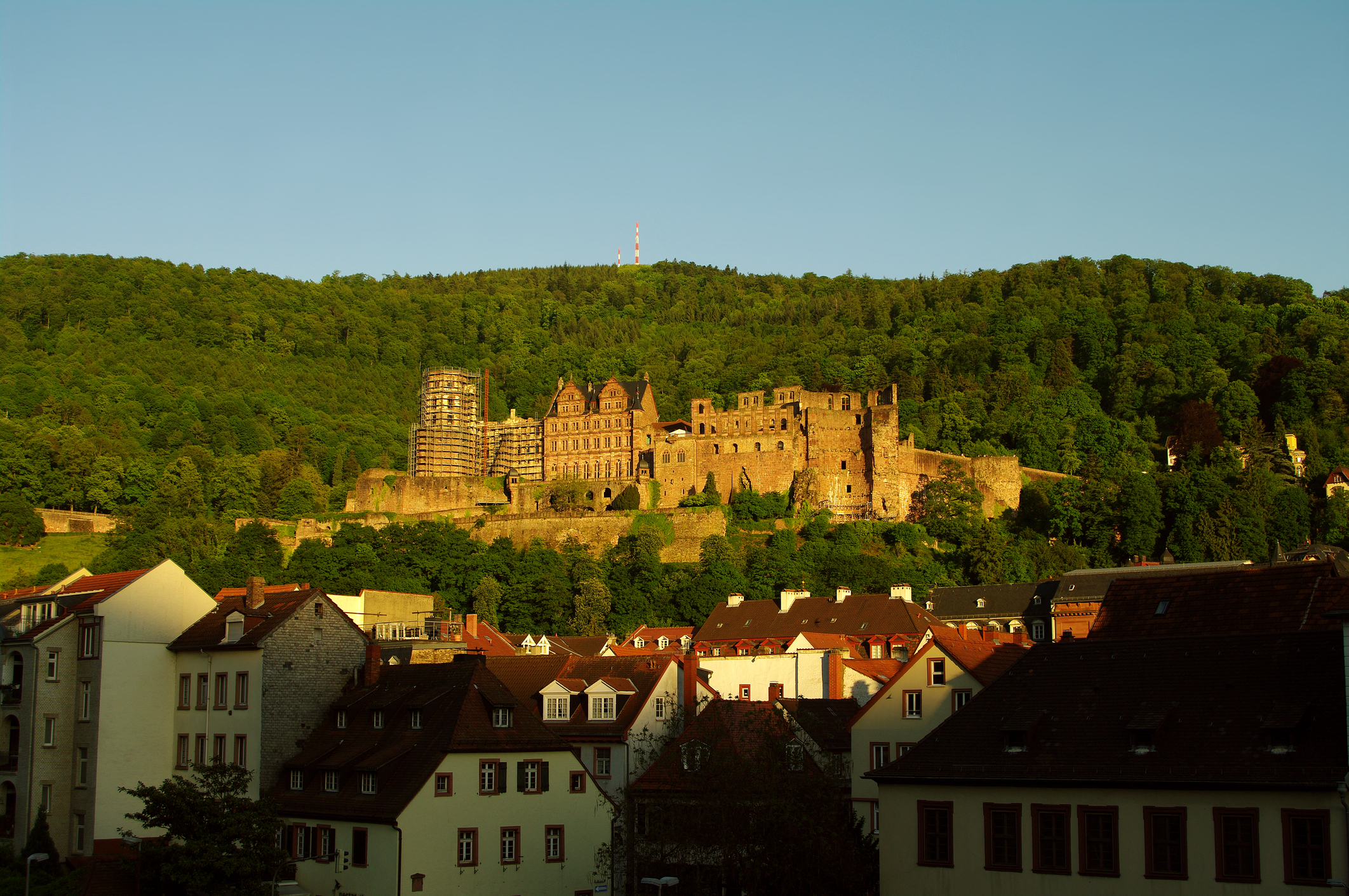
Heidelberg Castle at Sunset

Heidelberg Castle

Summer is generally considered the beach season and prime vacation time for families in Europe. Every part of Europe has its own specific cruise season length but usually, the shoulder months offer both fair weather as well as fair prices.

When the tourists head home, and the humidity is lower, Europe offers pleasant weather across the continent. September might be an extension of summer’s oppressive heat but the weather is usually just about right.

In Western Europe, September is still considered peak season, with tourists and residents enjoying the last outdoor festivals, trade shows, and outdoor activities. While temperatures can reach up to the mid-70s, it is very pleasant for the most part. The barge and river cruise ships experience their greatest demand in September because of the mild temperatures Throughout France and Germany there are many wine festivals going on at this time and other parts of Europe are also offering many types of fall festivals. French barge cruise, German river cruise, Spain river cruise, and Douro river cruise and so on will be perfect for cruising Western Europe in September and enjoying various kinds of wine festivals, music festivals, and fall wine harvests.

Other parts of Europe such as Prague, the capital of the Czech Republic situated near Germany and Austria are also attractive destinations that can be comfortably cruised during fall.

Barge Cruises

Cycling in Burgundy FranceSeptember through early October is the end of the barging season.  Barge cruising is primarily in France, Germany on the Mosel in September and October; Italy on the Po River, and in Holland and Belgium.  Great weather for cycling along the towpaths of the canals.

Many travelers agree that September is one of the best months for cruising Europe. The weather’s gorgeous and you’ll have an easier time getting into main attractions.

Tourist information offices normally stay open year-round but have shorter hours in the winter. Opening times are less predictable, so call ahead to double-check hours and confirm your plans!

For more information contact: Europeanbarging, 888-869-7907, jan@europeanbarging.com

Visit Macon on a Provence River Cruise

Enjoy the Saone River When Visiting Macon

maconMacon is a small and beautiful town situated on the banks of the Saone River. It is situated in the Saone-et-Loire department of France and is one of the exuberant and youthful towns of the same. It lies towards the south of the Burgundy region, north of Lyon and near Cluny. Macon is the southernmost town of Burgundy and has a distinctly Mediterranean feel.

The history of Macon dates back to over 2000 years. Due to the historical position of this French village as a significant border town to the east of France and on a principal trading route, Macon flourished extremely well. Like several other towns in Burgundy, today Macon and its adjoining area are renowned for local wines.

Macon though has a few prominent monuments; it is a wonderful place to spend some time. The part of the town along the banks of the Saone River is the main attraction for visitors. They especially love the view across the river to the town from the opposite bank with the cathedral towers overlooking the skyline.

The Old Cathedral of Saint-Vincent- built between 11th and 14th century-is the best part of the town. Though, unfortunately, most of the actual structure is no longer there, the remaining part such as the octagonal towers and the imposing entrance gives a sense of the original. The models kept inside the cathedral help you to imagine the original structure.

Another highlight of the town is the New Cathedral of Saint Vincent built in neo-Romanesque style in 1860. This is also a beautiful edifice with two large bell towers crowned by stone spires. The anterior façade of the cathedral has three stone doorways enclosed by distinctly carved stonework, particularly the larger central door.

The Museum of the Ursulines is yet another attraction of Macon. It is situated in the 17th century Ursuline convent and has various items on display dating back to the long history of the region and the people who lived near Macon.

And don’t forget to visit the excellently preserved apothecary which is now a museum on the ground floor of the town hall. Even today, it has its original 18th century furniture and a wide range of pills and potions from bygone era.

Book your Provence River Cruise and Enjoy Macon

Our Provence River Cruise will be an ideal choice for you to visit the attractive town of Macon. Book your holiday with us today!

For more information contact: Europeanbarging, 888-869-7907, jan@europeanbarging.com

Saarbrucken is the capital city of the state Saarland in Germany

Visit Saarbrucken Germany

saarbruckenSaarbrucken is the capital city of the state of Saarland in Germany. It is situated at the heart of the Saar-Lor-Lux region next to the French border. It is a charming city with lively cultural scene, baroque architecture and a French aura combined with the joie de vivre of the Saarland.

The population of the city is approximately 180,000 and is strongly influenced by its closeness to France and the chequered history of a French-German border town.

Saarbrucken is the administrative, cultural and commercial seat of Saarland. It came into existence in 1909 as a result of the fusion of three towns- Saarbrücken, St. Johann and Malstatt-Burbach. Initially, it happened to be the industrial and transport centre of the Saar coal basin and gave away products such as iron and steel, sugar, beer, pottery, optical instruments, machinery, and construction materials.

Saarbrucken is a renowned University City and trade fair venue. The city is easy-going, friendly and emanates a feel-good atmosphere.

Saarbrucken takes pride in being home to some of the best attractions in the state. It offers a great deal of interesting historical sites and milestones which attract countless visitors from all over Germany, Europe and other parts of the world. The Saar River and forest landscape are among the natural attractions of the state which everybody will admire and adore.

The topmost historical attraction of Saarbrucken is the Alte Brucke-the arched stone bridge across the Saar. Built in 1546, it served as a vital passageway across the river. It was destroyed during World War II by aerial bombings. When the war was over, the bridge was restored but to a smaller portion. Presently, visitors can cross the stone bridge and enjoy the history spread over centuries.

Another principal attraction in the capital city is Saarbrucken Castle. The location of the current castle dates back to the year 999 and over the years the castle has been rebuilt several times. Today, this German castle is part of a palace complex built in the Baroque style in the 18th century.

The Church of St. Arnual is yet another high point of Saarbrucken. It was built during the 13th century. This Gothic style building ranks among one of the most prominent religious landmarks in southwestern Germany. Old part of the town is also very attractive. The St. Johanner Markt(Sankt Johann market) with its boutiques, bars, bistros and restaurants is the heart of Saarbrücken life.

Take an Excursion and Enjoy Saarbrucken While you are at it

Saarbrücken can be visited on an excursion from a river cruise in Germany.
We offer River Cruises between Saarbrucken and Strasbourg. Call us today to book your holiday with us!